
From Portfolio to Booking: How Inquiries Land in One Place
Most booking inquiries are lost somewhere between "Hi!" and "Confirmed"
Ask any working artist where their last booking came from, and you'll get a messy answer. An Instagram DM. A forwarded email from a friend. A WhatsApp voice note from a producer you met two years ago. A comment under a reel that you only saw a week later.
The inquiries come in, but they come in everywhere. Keeping track of who asked what, what you quoted, and who you still owe an answer to ends up living in your head, or in a notes app, or nowhere at all.
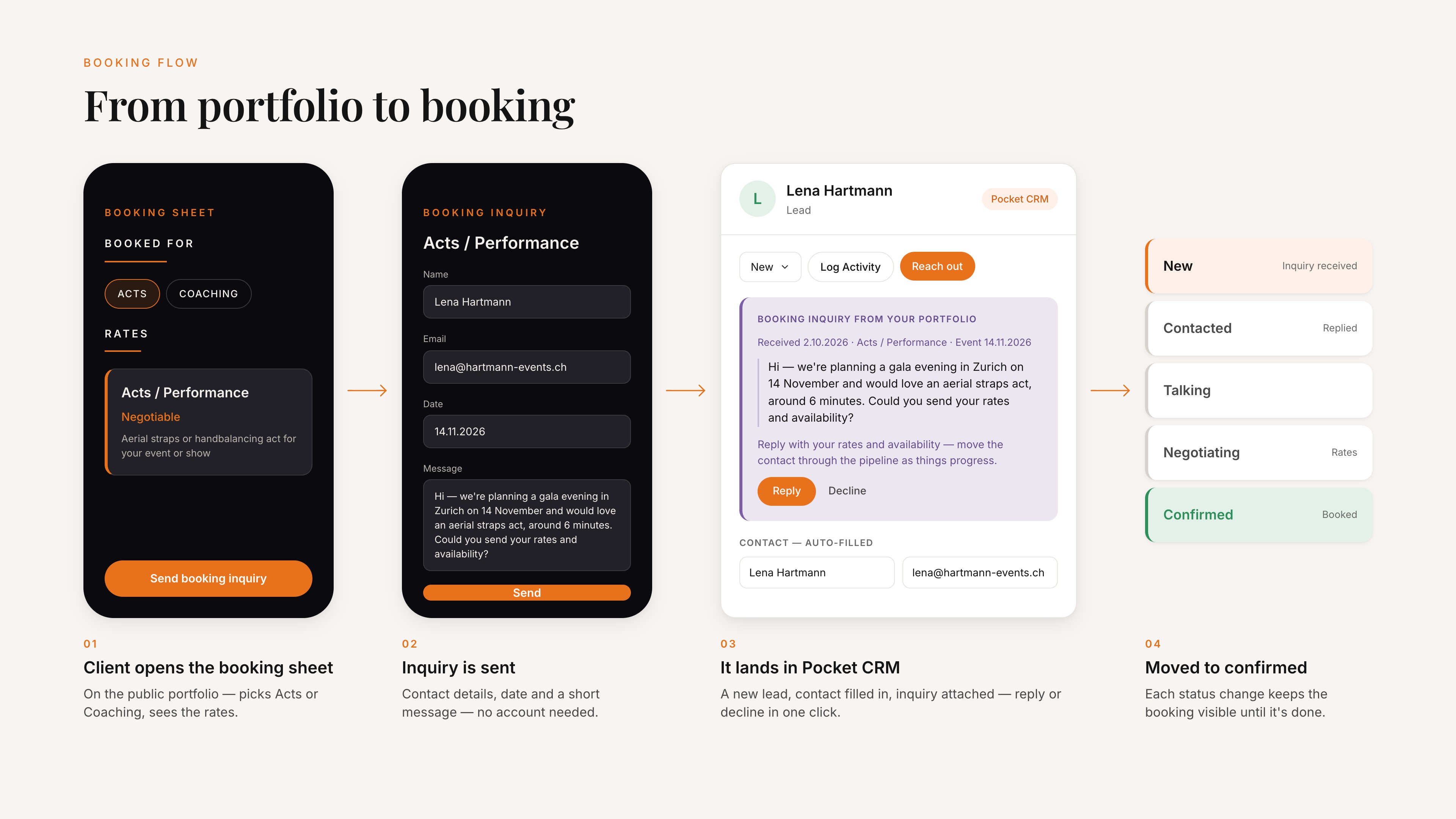
That's the problem we wanted to solve with the latest update to your portfolio on The Pending: a booking sheet that tells clients what you offer before they reach out, and a Pocket CRM where every inquiry lands, organized, in one place.
Step 1: The booking sheet answers the first five questions for you. Every first message from a client tends to ask the same things. What do you do? What does it cost? Where are you based? Do you travel? What languages do you speak?
Your booking sheet is now part of your portfolio and answers those questions upfront.
Booked for. Show at a glance what people can hire you for: acts, coaching, speaking, workshops, whatever fits your work.
Rates. Add up to six offerings, each with its own price, currency and unit. You decide what's visible. Not ready to publish a number? Set it to negotiable and add a short description instead, like "Aerial straps or handbalancing act for your event or show." The client knows what's on the table, and you still keep room to negotiate.
Key facts. The practical details clients, casting directors, venues and agencies ask before they book: languages, where you're based, travel radius, union membership, equipment, insurance. Pick from suggestions or add your own.
Reach (optional). If your audience is part of the value you bring, say so: monthly listeners, followers, subscribers.
The result: by the time someone contacts you, they already know whether you're a fit. Fewer "just checking your rates" emails, more serious inquiries.
Step 2: Every inquiry lands in your Pocket CRM
When a client sends a booking inquiry through your portfolio, it doesn't disappear into an inbox. It lands directly in your Pocket CRM as a portfolio inquiry, linked to a contact.
From there you can reply with your rates and availability, or decline, right inside the inquiry. The contact stays saved with their details (email, phone, website, social handles), so the next time they reach out, you have the full history in front of you.
No copy-pasting between apps. No "wait, which email was that in?"
Step 3: Move every lead through a clear pipeline
This is where it gets useful. Every contact sits in a pipeline stage:
- New: just came in, not yet answered
- Contacted: you reached out or replied
- Talking: there's a real conversation going
- Negotiating: you're discussing fee, dates, conditions
- Confirmed: it's booked
As things progress, you move the contact to the next stage. One look at your pipeline tells you exactly where you stand: 22 new leads, 2 conversations going, 1 deal in negotiation, 1 confirmed.
You can also log activity (emails in or out, calls, meetings, follow-ups, proposals). Your "last contacted" date updates whenever you log real contact, not when you write an internal note or the status changes automatically. So "last contacted three weeks ago" actually means three weeks of silence, and it's time to follow up.
Why a system like this matters
It can feel like overkill. You're an artist, not a sales team. But that's exactly why it helps.
You stop losing money to forgotten follow-ups.
Many bookings don't fail because the client said no. They fail because nobody followed up. A pipeline makes silence visible.
You respond faster and more professionally.
Clients book the artist who answers clearly and quickly. Having your rates, facts and contact history in one place means you can reply in minutes, not days.
You negotiate from a better position.
When you can see what you quoted before, what the client asked for and how the conversation went, you don't undersell yourself or contradict an earlier offer.
You see patterns.
Which offerings get the most inquiries? How many leads actually convert? Where do conversations stall? A pipeline turns gut feeling into something you can act on.
You free up headspace.
Your brain is for creating, rehearsing and performing, not for remembering that the event producer from Lisbon wanted an answer by Friday.
Getting started
- Open your portfolio settings and fill out your booking sheet: what you're booked for, your rates (or "negotiable"), and your key facts.
- Make sure the offerings you want to show are set to shown on sheet.
- Share your portfolio link wherever clients find you: bio, email signature, website.
- Check your Pocket CRM regularly, answer new inquiries, and move contacts through the pipeline as conversations progress.
Inquiries will keep coming from everywhere. But now there's one place where they come together, and one clear view of what to do next.
Find work that matches yours
Opportunities, application tracking, and a portfolio that works for you — free to start.
Get started freeRelated articles
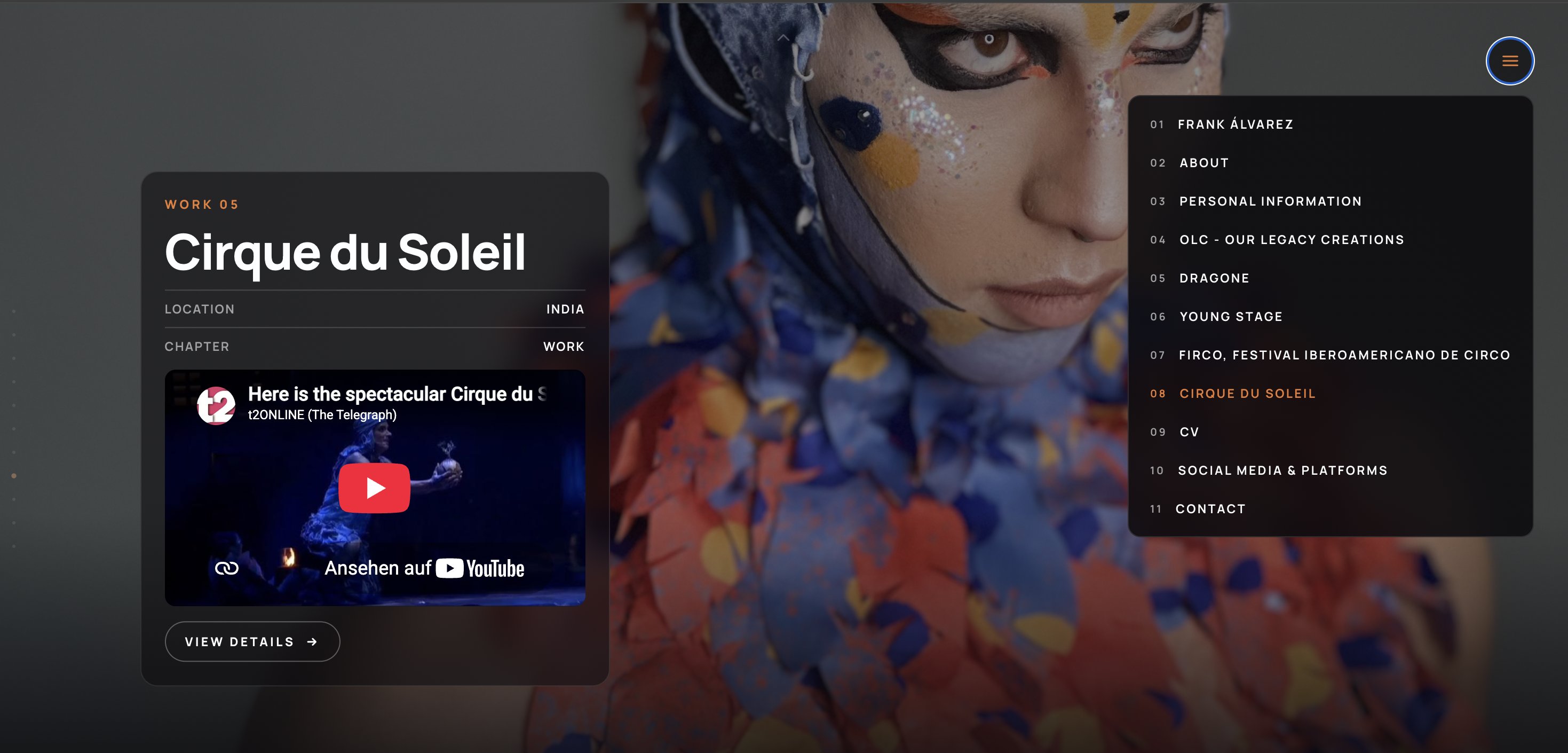
The Artist Portfolio on The Pending, Explained
A free portfolio for creatives of any discipline. A custom link instead of a website, a profile casting people search, and no commission.
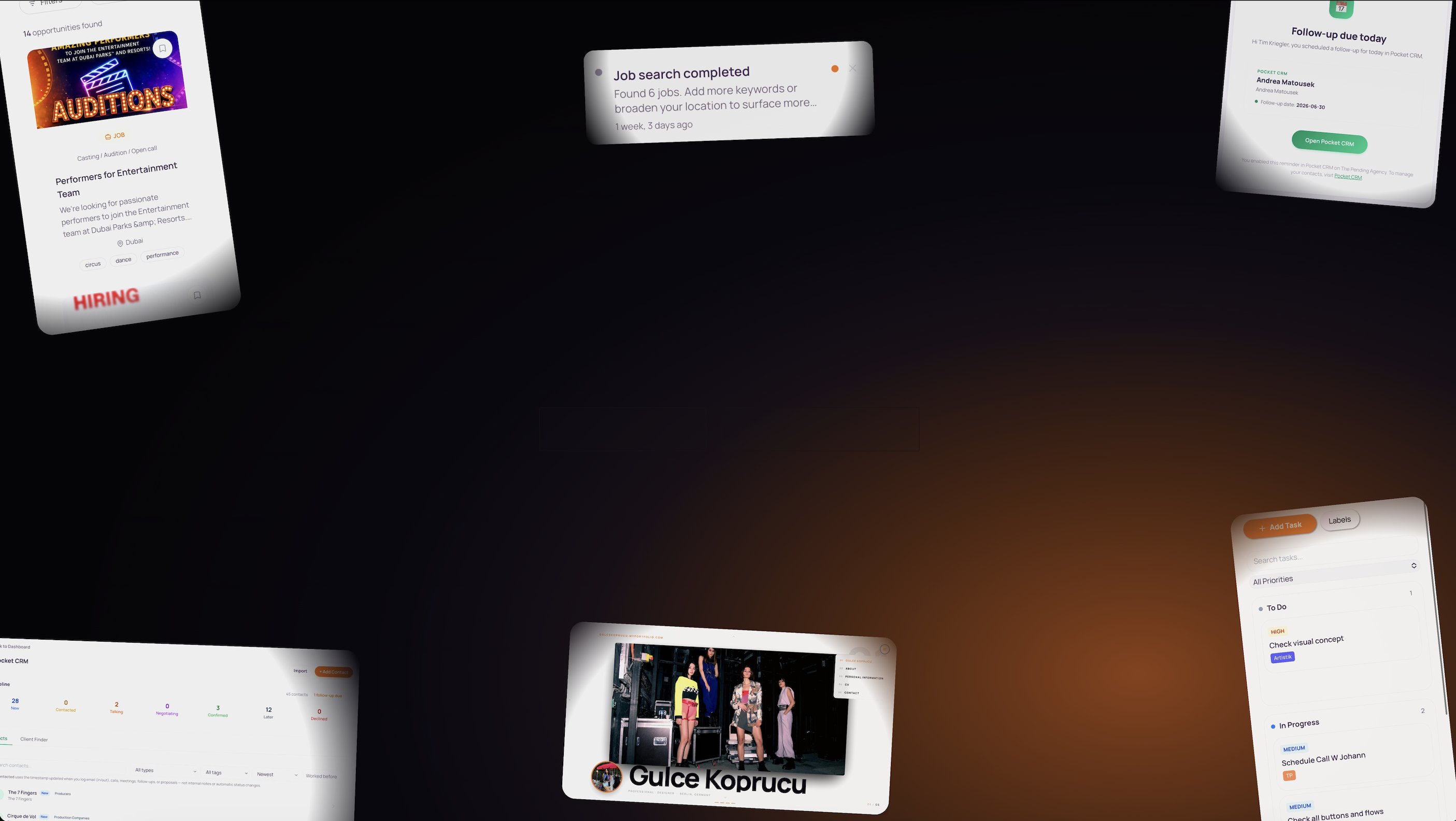
What's New for Artists & Creatives
The Pending 2.0 is here: free portfolios, simpler workflows, and AI that gives you back time for the work that matters. Here's what changed.
Welcome to The Pending 2.0
Why we built The Pending — and how 2.0 brings artists and agencies together with real tools instead of Google Forms and inbox chaos.